
Before the Claim, There Was a Clue: Lessons From 17 Auction Arbitrations
Claims are late feedback. A retrospective review can help your team find the earlier clues—and build a better handoff before the next sale.

| Case group | Cases |
|---|---|
| Total arbitration cases | 26 |
| Scanned arbitration cases | 17 |
| Would have flagged under revised logic | 14 (82.35% of 17) |
| Mechanical/non-OBD per internal review | 3 |
| Unscanned, excluded from scan denominator | 9 |
Read the claim backward
An arbitration file arrives after the sale, when options have narrowed and everyone wants an explanation. A general manager can learn from that file—but the better operational question starts earlier: what information existed before the decision, and who had a chance to act on it?
That question turns a claims meeting into a workflow review. Bring the pre-sale record into the room alongside the claim file. Look for the moment when a useful finding could have prompted a question, a focused inspection or a clearer disclosure. The exercise is about improving the next decision, rather than assigning blame for the last one.
CarDr’s anonymous Midwest retrospective puts that approach into focus. Applying revised logic to earlier scans identified clues worth reviewing in vehicles that later entered arbitration. For a GM, the interesting follow-up is operational: how would those clues reach the person responsible for the vehicle before release?
Seventeen is the denominator—not the whole fleet
The internal review covered 26 arbitration cases. Seventeen had CarDr scans; nine did not. Applied retrospectively, revised logic would have flagged 14 of the 17 scanned vehicles that later entered arbitration. Fourteen divided by seventeen is 82.35%, rounded to two decimal places.
According to the internal review, the remaining three scanned cases concerned mechanical/non-OBD conditions. The nine unscanned cases sit outside the scanned-case comparison. Those groups point to two separate operating needs: preserve physical inspection for conditions beyond the scan, and make scan completion visible enough that a missing record gets attention.
The denominator is the 17 scanned vehicles that later entered arbitration. Use that defined group to organize a claims audit: pair each pre-sale scan with the later inspection findings, note the decision made at release and identify where the record could have better supported review. The adjacent caption and methodology explain what the percentage measures.
The revised logic went live September 18, 2026. This retrospective applies that logic to the reviewed scans. For your next pilot, retain the logic version alongside the report so the team can compare like with like and understand how the decision process evolves over time.
A clue needs interpretation
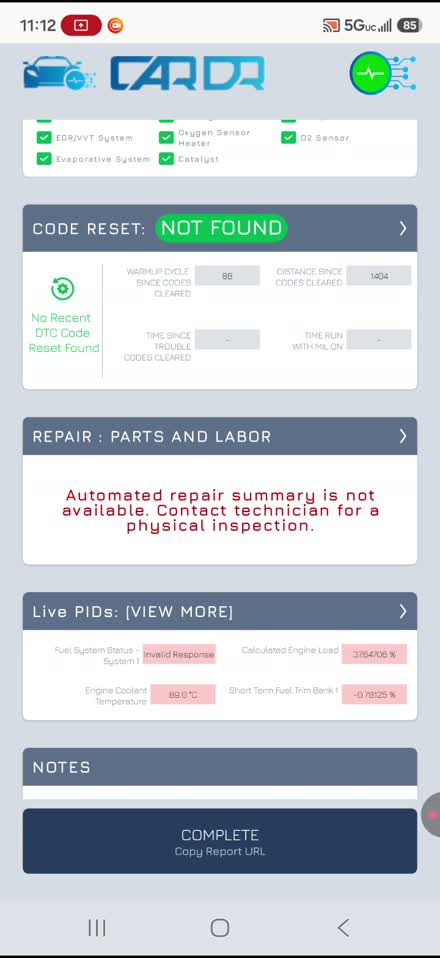
Useful diagnostic context can include OEM/module-level codes, severity, reset or readiness information and estimated repair implications. Together, these may help an inspector decide where to look first and help a manager decide which questions need answers before release.
Consider a hypothetical vehicle with transmission-related module findings and recent reset context. The useful response is to review the report, ask about service history and direct the inspector toward relevant symptoms. That turns a broad concern into a focused question. Code interpretation and physical findings together give the decision owner a stronger record to work with.
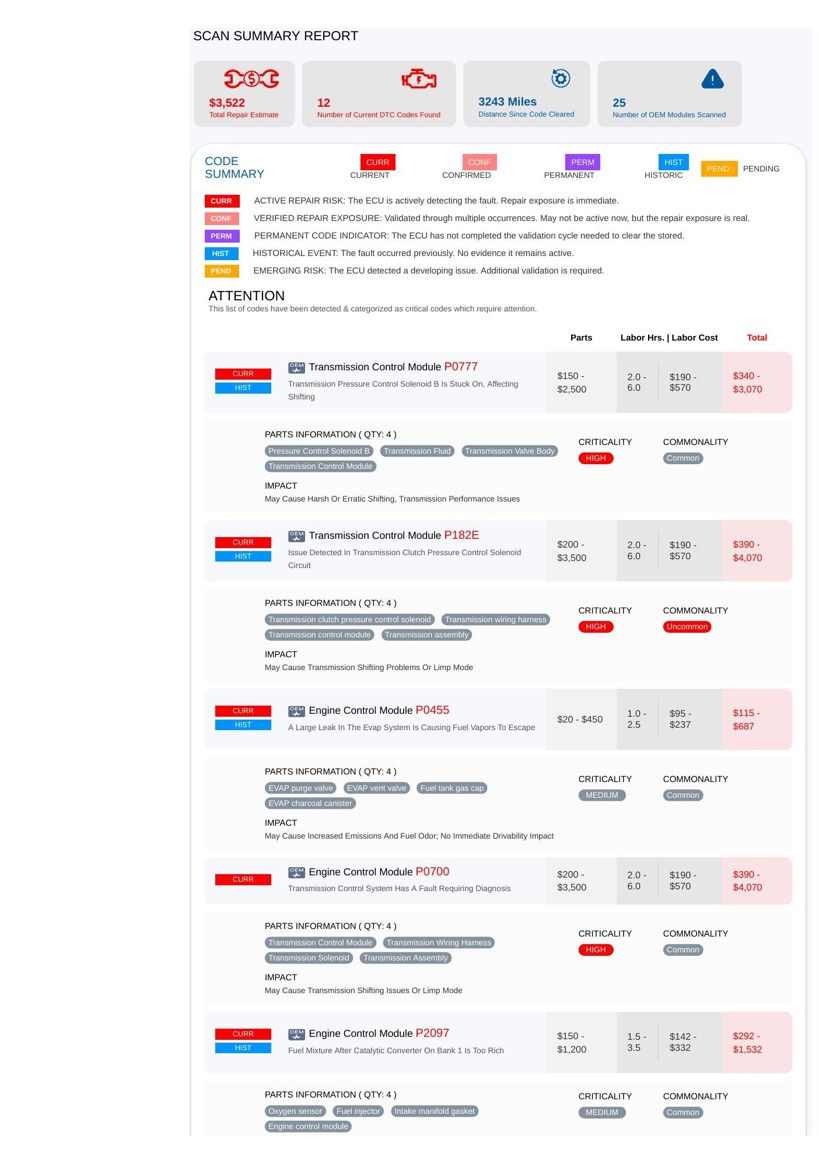
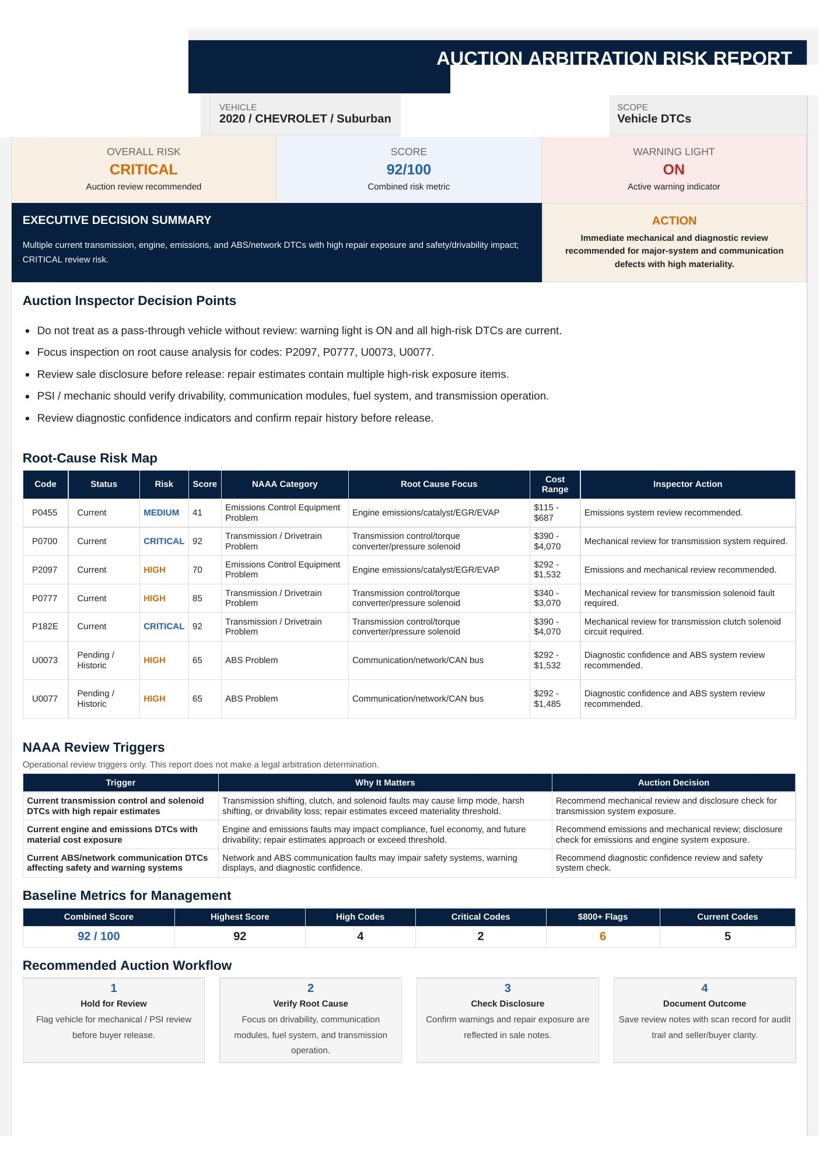
Physical inspection still matters, especially for mechanical-only conditions outside the available OBD evidence. Set a clear escalation route for those findings and follow local inspection and disclosure policy. A documented review lets the next team see both the diagnostic evidence and the inspector’s conclusions without reconstructing the conversation later.
Was the flag visible where action was possible?
A flag in a record becomes useful when someone sees and acknowledges it at the decision point. Put report access inside the release conversation, rather than leaving it for a later search. An inspector who can open the finding before retrieving the car starts with a question to answer instead of a record to chase.
Read what the video covers
- Standing cars don't make you money; moving cars do.
- Mechanical Intelligence at intake.
- After the scan, the app shows an Arbitration Risk flag linked to the Arbitration Risk Report.
- No flag → auction lanes under your SOP; flag → park and review.
- Example report: 2020 Chevrolet Suburban, 92/100 Critical, focused mechanical review.
- Routing always follows your auction SOP.
Assign a decision owner. Define how that person receives the flag, opens the relevant report and records the chosen action. Keep the basic routing flag separate from an optional requested detailed score report. Don’t make an additional score a substitute for acknowledging the information already available.
Give failed and incomplete scans a clear exception path. An empty result should not silently look like a completed scan without a flag. Make the inspection findings and the final routing or disclosure decision available to the next responsible team.
Turn hindsight into a prospective test
Begin with past claims and match them to pre-sale information using a documented case definition. Record which vehicles had scans, what logic version you apply, what information was available at the time and what remains unknown. Preserve cases that challenge the hypothesis rather than excluding inconvenient outcomes.
Then measure a new representative cohort prospectively. Establish the baseline, eligible population, routing rules and follow-up window before looking at results. Track review completion as well as flags and subsequent claims. A flag that nobody reviews is a different operational problem from a reviewed finding that cannot explain a later claim.
Compare outcomes carefully and account for differences in inventory, eligibility and policy. Include scan effort, fees and additional inspection work. A retrospective can suggest where a pilot is worth running; only disciplined forward measurement can tell your team what changed in its own operation.
Claims will always contain some late information. The GM’s opportunity is to make the earlier information easier to see, easier to interpret and harder to lose between departments.
Questions from the GM’s desk
Does 82.35% mean an arbitration reduction?
No. It is 14 of 17 scanned later-arbitrated vehicles that revised logic would have flagged in an internal retrospective. It is not prospective accuracy or a claim-prevention result.
How were the nine unscanned cases treated?
They were excluded from the scanned-case denominator. Without scans, they cannot be classified as detected or missed by this logic.
Why does the logic date matter?
The revised logic went live September 18, 2026. The review applies that logic retrospectively; it does not say those vehicles had been flagged at their original scan.
Sources & methodology
CarDr internal Midwest retrospective: 26 arbitration cases; 17 with scans, nine without. Revised logic, live September 18, 2026, would have flagged 14/17 (82.35% rounded); three remaining scanned cases were mechanical/non-OBD per internal review. Nine unscanned cases are excluded, not classified as detected or missed. This selected later-arbitrated group does not establish prospective accuracy, specificity, fleet flag rate, claim prevention or arbitration reduction. Codes do not confirm component failure; resets are not proof of fraud. Diagnostics support inspection and local-policy decisions, not legal arbitration determinations.