
Stop Driving Away Your Profits. Start at Check-In.
A vehicle’s route through your lot is a cost decision. Give your team useful evidence before the next move—not after it.

The cost hiding between the buildings
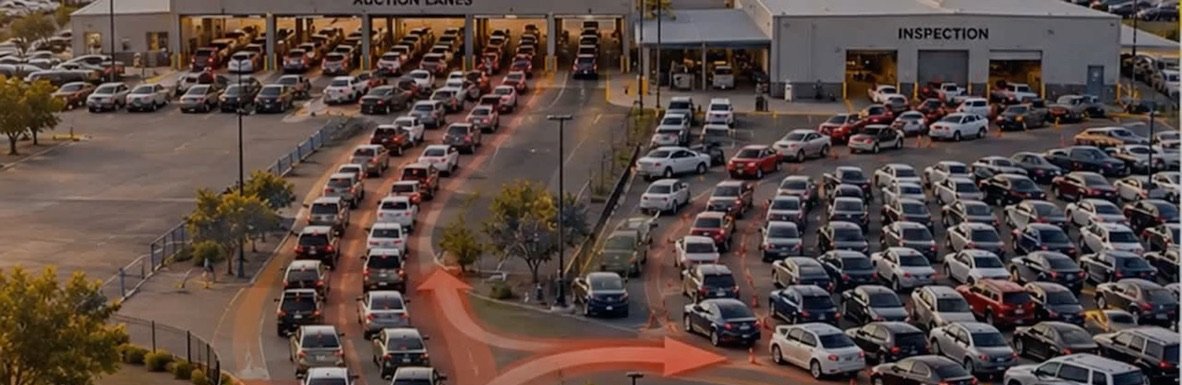
Watch a car arrive at an auction. It checks in, gets parked, moves to inspection, returns to parking and eventually heads toward the sale. Each trip may have a perfectly reasonable explanation. Taken together, though, those trips deserve the same scrutiny as any other operating expense.
The question isn’t whether a vehicle should ever move twice. It’s whether the next move adds information or simply compensates for information that arrived too late. A driver retrieves the car because someone needs a closer look. An inspector searches for the record because the finding didn’t follow the vehicle. Another move restores the original queue. Work accumulates; useful evidence may not.
For a general manager, that makes the intake route a margin decision. Every avoidable move uses labor, lot space and attention that could serve the next arrival. Earlier diagnostic evidence creates a practical opportunity: identify the cars needing a closer look before the team spends effort sending them through the same queue twice.
Read what the video covers
- Standing cars don't make you money; moving cars do.
- Mechanical Intelligence at intake.
- After the scan, the app shows an Arbitration Risk flag linked to the Arbitration Risk Report.
- No flag → auction lanes under your SOP; flag → park and review.
- Example report: 2020 Chevrolet Suburban, 92/100 Critical, focused mechanical review.
- Routing always follows your auction SOP.
Start with evidence at outside check-in
A CarDr ULTRA scan at outside check-in can put an Arbitration Risk Flag in front of the team before it assigns the vehicle’s next destination. The operating sequence is straightforward: scan, make the flag visible, review the report on flagged cases, then document the team’s decision under the auction’s own standard operating procedure.
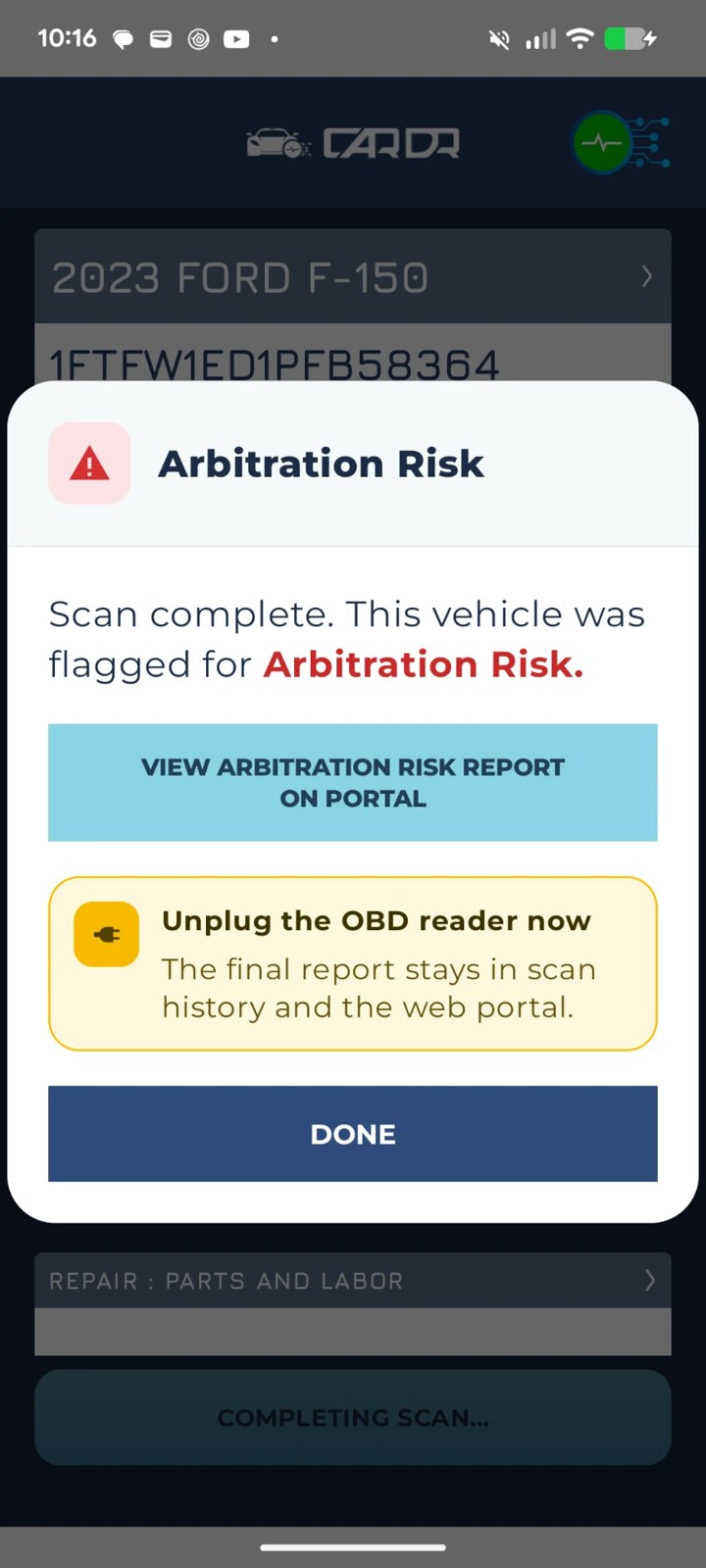
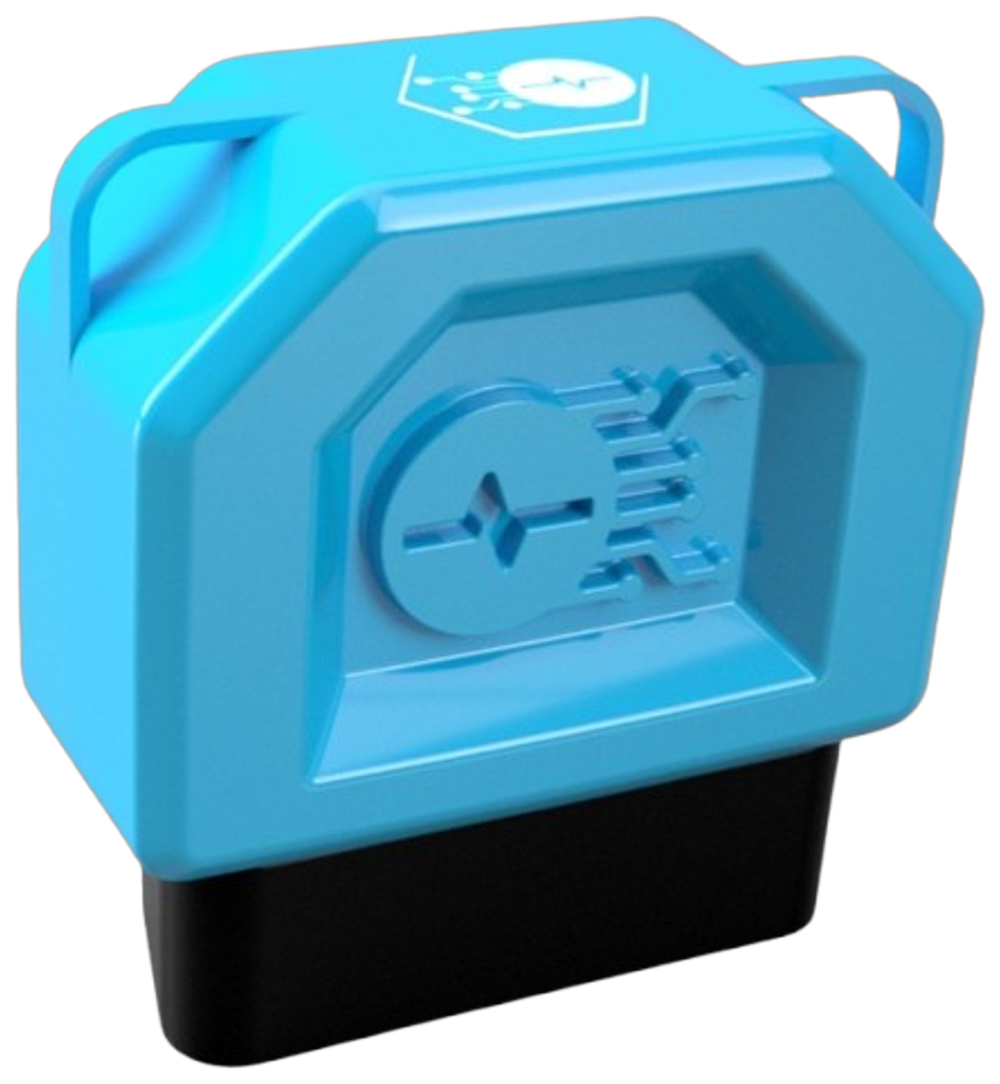
Build the handoff around the next action: the scanner records completion, the decision owner sees the flag and the inspector receives the relevant findings. Local routing policy stays in charge. Physical inspection remains part of the process, including when a vehicle has no flag; the caption and methodology below explain the limits of the routing signal.
Keep the basic flag distinct from an optional requested detailed score report. The flag can support basic routing without making a paid detailed score a prerequisite for every decision. Decide during scoping which reports the team needs, who can access them and when additional detail is useful.
A split route, not a blind shortcut
An illustrative intake split sends a vehicle without a flag toward the lane only when local policy and the rest of its inspection requirements allow it. A flagged vehicle goes to focused review before release. A failed or incomplete scan goes to an exception path—not into the no-flag queue.
The decision owner should be able to answer three questions: what did the scan find, what did we review, and why did we choose this route? OEM/module-level findings, code severity and reset or readiness context help organize that review. Ask the inspector to connect the finding with symptoms, service history and physical observations before choosing the next step.
The report should travel with the decision. A useful finding left in a separate inbox is less valuable than a modest finding acknowledged before the vehicle moves. Agree how the scanner, decision owner and inspector hand that record to one another.
Run a pilot that can survive a finance meeting
First, record the existing process. Count touches and observe elapsed times from arrival through ready status. Include vehicles that need repeat handling and the reasons for those moves. Define a touch consistently so that the baseline and pilot aren’t measuring different things.
| Measure | How to record | Owner |
|---|---|---|
| Touches per vehicle | Count every move, same definition before and during pilot | Operations |
| Arrival-to-ready time | Timestamp arrival and ready status | Operations |
| Repeat-handling reasons | Reason code on each repeat move | Inspection lead |
| Scan, review effort and fees | Minutes per scan/review plus actual fees | Finance |
| Subsequent claims | Comparable eligible population, fixed follow-up window | Arbitration manager |
Next, choose representative arrivals rather than the easiest vehicles or a convenient quiet shift. Agree the routing and escalation rules before scanning starts. Identify who owns a flag review and who can override a route. Let the inventory and observed findings shape the staffing plan, with coverage for the peaks when arrivals and inspection demand overlap.
Compare rehandling and downstream outcomes with the baseline. Include the effort to connect, scan, review and record exceptions, along with actual scan, report and service fees. Track whether changed routing simply transfers work to another team. A shorter queue at check-in is not progress if it creates an undocumented backlog at inspection.
Review the pilot with operations and finance together. Separate capacity released from cash actually saved. Staff may use recovered attention to inspect difficult vehicles more carefully; that can be worthwhile without implying a payroll reduction. Keep subsequent claims in view, using a comparable eligible population and enough follow-up to see outcomes.
Protect margin one routing decision at a time
A successful intake change has a visible clue, a responsible person and a decision that can be explained later. Start with one representative check-in workflow, learn where information gets lost and remove moves that no longer serve a purpose. Give the team a regular review of exceptions so the new route stays useful as inventory changes.
The goal is not to wave every vehicle through. It is to stop spending scarce attention and lot capacity on avoidable journeys while preserving the inspections that matter. Protect margin one routing decision at a time.
Questions from the GM’s desk
Does no flag mean a vehicle is defect-free?
No. A flag supports local-policy routing decisions; it does not replace physical inspection, certification or legal arbitration review.
Is a detailed score report required for basic routing?
No. The basic Arbitration Risk Flag is distinct from an optional requested detailed score report. Agree report access and escalation during pilot scoping.
Sources & methodology
Illustrative workflow and recommended pilot measures, not measured customer results. Diagnostic evidence supports documented local-policy decisions; a routing flag is not a sale light, certification or legal arbitration determination, and no flag does not mean defect-free. Vehicle support and completeness vary; physical inspection remains necessary. Codes require interpretation, and resets can have benign explanations.